Category Archives: Uncategorized

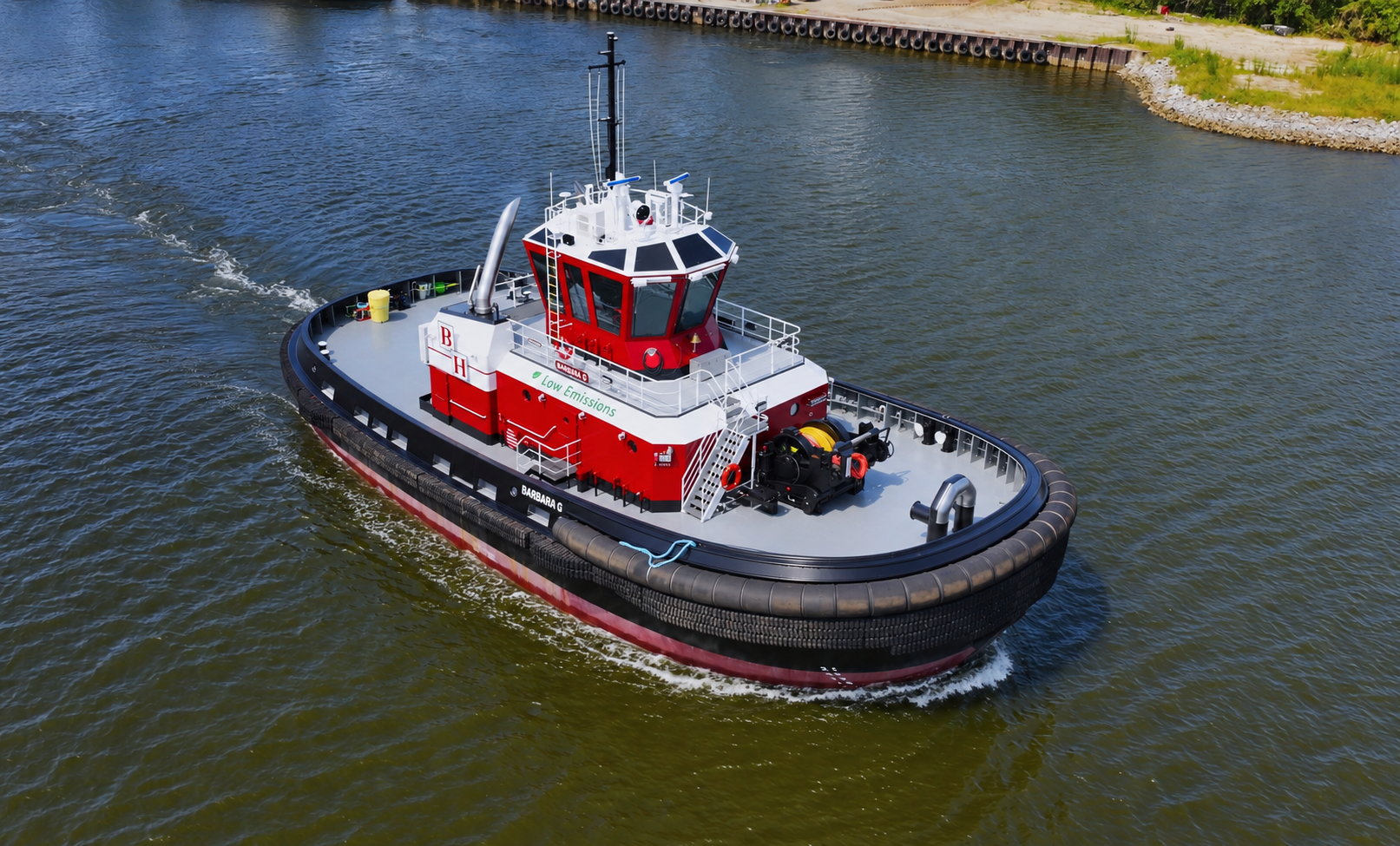
Master Boat Builders Christens and Delivers Marauder, First of Eight Tugboats Built for Maritime Partners

New RApport 2700 tugboat series to support towing, escort, and marine support operations

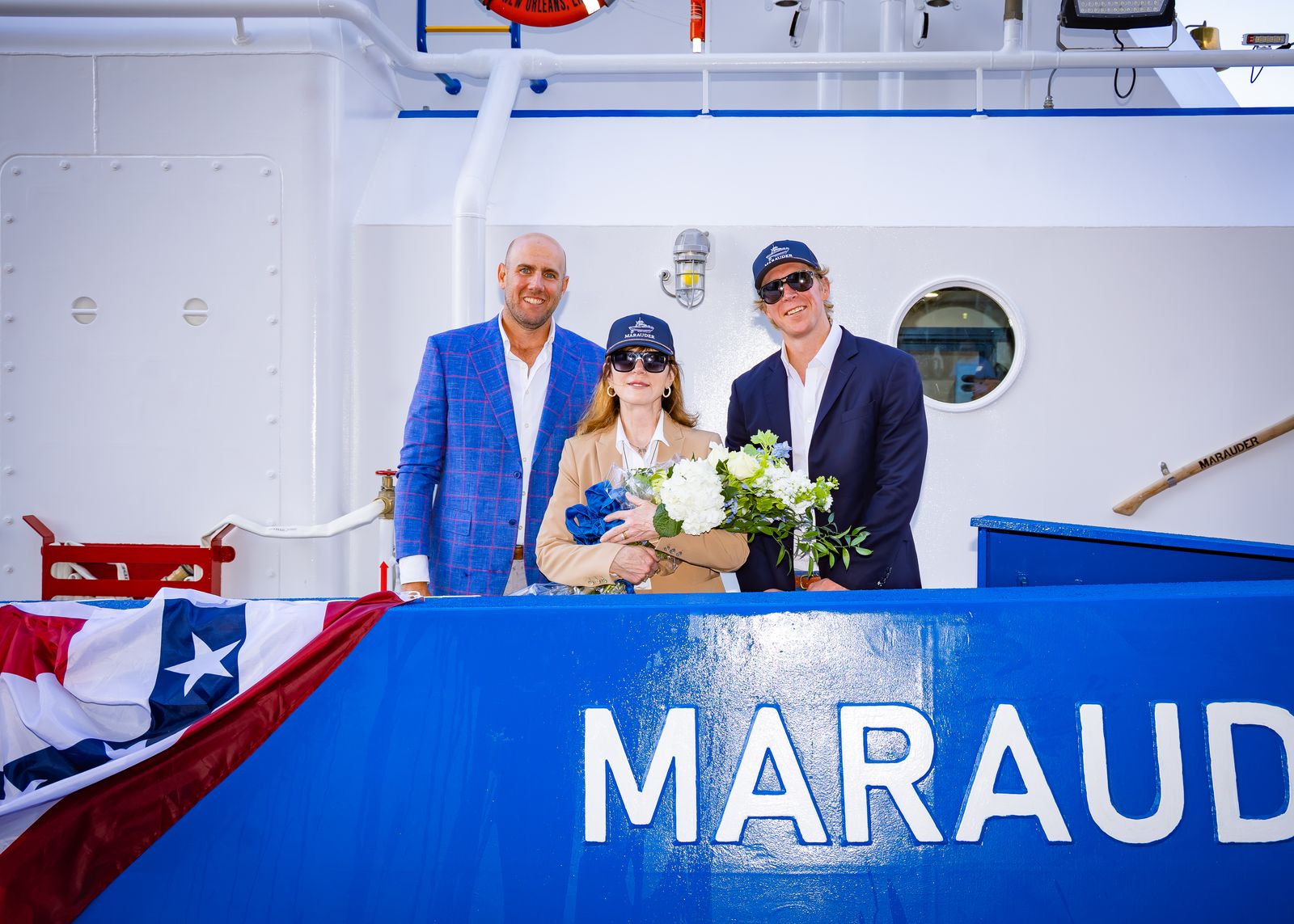
Coden, Ala. – (May 21, 2026) Representatives from Master Boat Builders, Inc. alongside partners from Maritime Partners, LLC recently gathered to christen Marauder, the first tugboat in an eight‑vessel construction program, at the Gulf Quest National Maritime Museum in Mobile, Alabama. The ceremony celebrated a significant milestone for both companies while honoring the dedicated workforce whose craftsmanship and expertise brought the vessel to life.

More than a ceremonial milestone, the christening marks the transition from construction to service, recognizing the dedication, craftsmanship, and teamwork required to bring a vessel from concept to completion. By custom, a ship’s sponsor shares a lifelong bond with the vessel, serving as a guardian of good fortune for the ship and crew. Marauder’s sponsor, Mrs. Alison Parker Carmel, performed the christening, marking the vessel’s formal entry into the fleet and celebrating the future journeys, missions, and economic impact the vessel will carry forward.

Mrs. Carmel is the wife of Stephen M. Carmel, a distinguished figure in American maritime history. A 1979 graduate of the U.S. Merchant Marine Academy, he began his career at sea, earning command of a 40,000-ton tanker at age 26. He later held senior roles at Maersk Line, Limited, served as President of U.S. Marine Management, LLC, and in December 2025 was confirmed by the U.S. Senate as Administrator of the Maritime Administration (MARAD).

“This christening is a proud moment for our workforce and an important milestone in this program,” said Garrett Rice, President of Master Boat Builders. “From the earliest stages of construction to final delivery, Marauder reflects the craftsmanship, experience, and pride of the men and women who build vessels at our Coden shipyard. We’re honored to deliver the first vessel in this eight-tug program for Maritime Partners.”

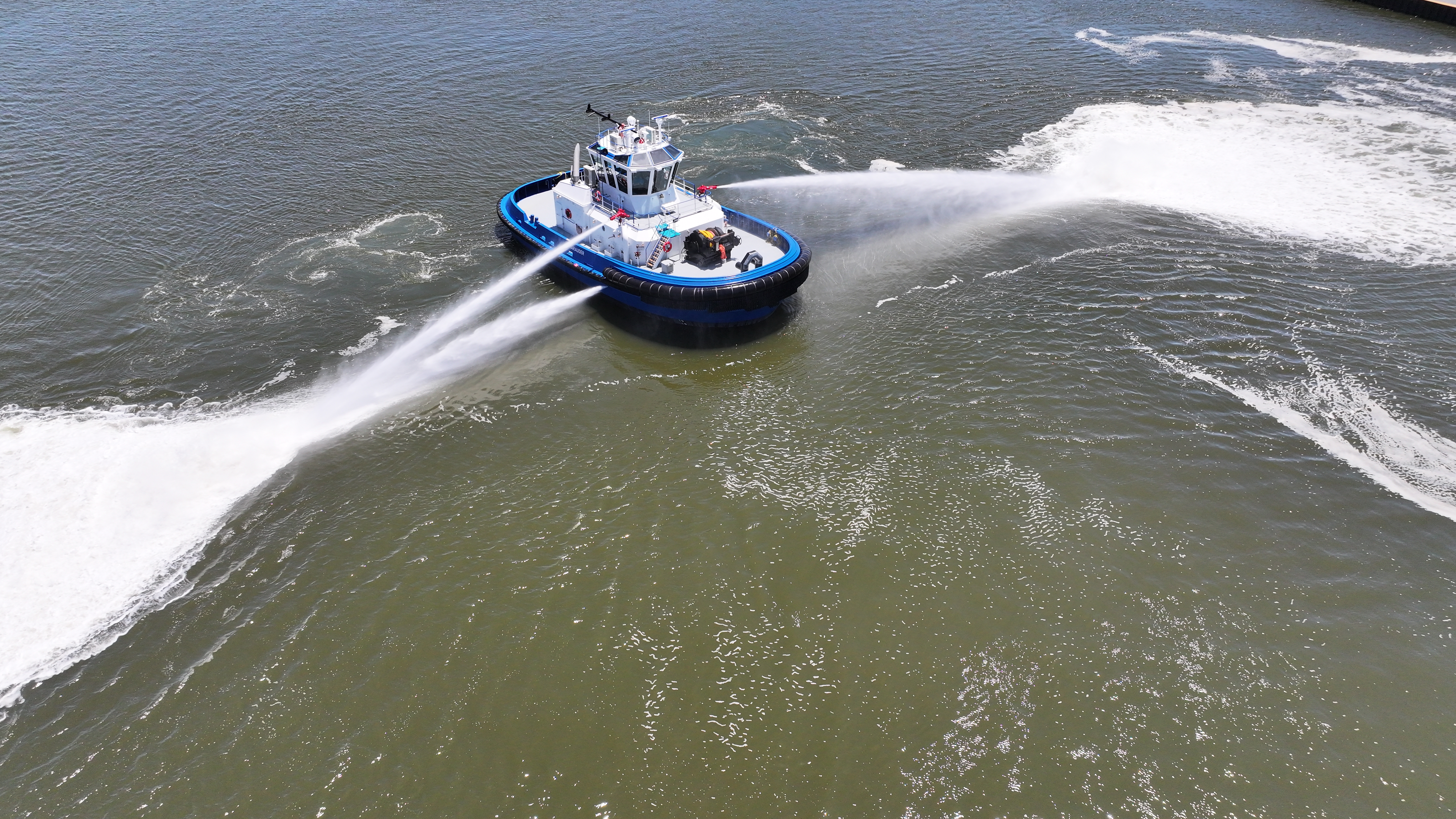
Marauder measures 88 feet in length and is classified as an A1 Escort Tug and Towing Vessel. The vessel carries AMS (Automated Machinery System) certification, UWILD (Underwater Inspection in Lieu of Drydocking) certification, and FFV1 fire‑fighting capability, and is designated a Low Emissions Vessel (LEV) under U.S. standards. With delivery complete, Marauder will now enter Maritime Partners’ fleet, supporting operations across towing, escort, and marine support services. Seven additional vessels remain under contract, with deliveries scheduled to continue through completion of the series. Each delivery strengthens the Gulf Coast shipbuilding industrial base and demonstrates the capability of American shipyards to deliver modern, mission-ready vessels for the maritime industry.

“A tremendous amount of thought, collaboration, and craftsmanship went into making sure this vessel was built for the important work ahead,” said Bick Brooks, owner of Maritime Partners. “Marauder, along with the seven sister vessels that will follow, represents a new standard for performance, efficiency, and versatility in the ship-assist market. From the very beginning, we knew we didn’t want an off-the-shelf design. We worked closely with Garrett Rice and the outstanding team at Master Boat Builders to bring together the best ideas, features, and capabilities available anywhere in the industry. We’re proud of what this partnership has accomplished, and we’re excited to see these vessels go to work.”

ICYMI – Master Boat Builders President Rebuts WSJ Anti-Jones Act Editorial

Garrett Rice, President of Master Boat Builders, authored a letter to the editor in the Wall Street Journal yesterday responding to the editorial board’s op-ed, “Trump Halts the Blockade of U.S. Ports.”

In his response, Rice argues that America’s maritime industry is a cornerstone of national security, economic strength, and industrial capacity — and that broad Jones Act waivers would undermine American shipyards, mariners, and maritime jobs while doing little to meaningfully or lastingly reduce fuel prices.

Read the full LTE below:

Is It Time to Abandon Ship on the Jones Act?

By Garrett Rice

May 13, 2026

Your editorial is right that America faces real energy and supply-chain pressures as a result of the conflict in the Strait of Hormuz. But waiving the Jones Act is the wrong response.

Washington warns of China’s maritime dominance, yet the administration has opened domestic shipping routes to Chinese competition.

The U.S. Trade Representative’s office last year concluded that China’s unfair practices in shipbuilding and maritime logistics threaten American interests. Reuters reported that China’s share of global shipbuilding has risen from about 5% in 2000 to over 50% today, while the U.S. share has fallen below 1%.

The Jones Act was designed to preserve a domestic maritime industrial base and a pool of American mariners available during war or national emergencies. Even many critics of the law concede that maritime capacity is tied to national security.

Supporters of the waiver argue it could reduce costs for fuel and other commodities. But the price effects are likely limited and temporary.

The law allows for specific voyage-based waivers when Jones Act vessels aren’t available, but broad waivers that weaken domestic shipping while China expands its maritime dominance move the country in the wrong direction.

ICYMI – Master Boat Builders’ President on Steve Gruber Show: Jones Act Waiver Risks U.S. Shipbuilding

WASHINGTON, D.C. – Today, Garrett Rice, President of Master Boat Builders joined The Steve Gruber Show to discuss growing industry concerns over the Jones Act waiver. Rice warns the move could benefit foreign competitors—including China—while weakening America’s maritime industry and national security. You can read his recent op-ed in Real Clear Policy that dives into this issue further HERE.

CLICK HERE TO WATCH

Master Boat Builders Recently Began Module Fabrication for U.S. Navy T-ATS Program

CODEN, Ala. – Master Boat Builders, Inc. (“Master Boat”) recently announced the commencement of module fabrication for the U.S. Navy’s Navajo-class Towing, Salvage, and Rescue Ship (T-ATS) program under its partnership with Austal USA. The start of fabrication marks a significant milestone as Master Boat advances its role in the Navy’s effort to strengthen and diversify the domestic shipbuilding industrial base.

“Starting fabrication on these modules is an exciting and proud moment for our team,” said Garrett Rice, President of Master Boat Builders. “We said we were ready to take on complex Navy work, and now we’re proving it. This is exactly the kind of program that showcases what Gulf Coast shipbuilders can do.”

Master Boat is fabricating two T-ATS hull modules at its Coden shipyard, located approximately 30 minutes from Austal USA’s Mobile facility. Upon completion, the modules will be transported to Austal USA for final erection and outfitting.

The T-ATS program is designed to replace the aging fleet of ocean tugs and rescue and salvage ships with a modern, multi-mission platform capable of open-ocean towing, salvage and recovery operations, diving support, and humanitarian and disaster response. Master Boat’s participation in the program also supports workforce development and strengthens regional shipbuilding capacity along the Gulf Coast, where the company currently employs more than 400 people at its Coden shipyard.

ICYMI – Master Boat Builders’ President in Real Clear Policy: The Jones Act Waiver: A Gift to China and NATO’s Iran Onlookers

WASHINGTON, D.C. – This week, Garrett Rice, President of Master Boat Builders, authored an op-ed in Real Clear Policy titled “The Jones Act Waiver: A Gift to China and NATO’s Iran Onlookers.”

Rice lays out the implications of the administration’s decision to extend the Jones Act waiver to the domestic maritime industry and argues that it has undermined American shipbuilders, benefited Chinese-linked operators, and rewarded NATO allies who declined to support U.S. operations in the Strait of Hormuz. He calls on Washington to use Section 501(b) — a narrower statutory authority already on the books — to tailor future waivers to genuine defense needs without displacing American mariners or chilling investment in U.S. yards.

Read the full article below:

The Jones Act Waiver: A Gift to China and NATO’s Iran Onlookers

By Garrett Rice

May 1, 2026

When Iran closed the Strait of Hormuz, the Administration had a real problem on its hands. I understand why a White House would want to move fast, but moving fast and moving smart are not the same thing. This week the Administration extended the current Jones Act waiver for another 90 days. Washington needs to take an honest look at what this waiver has actually produced.

The U.S. Maritime Administration (MARAD), which oversees the nation’s merchant fleet, has data that tells the story. Of the fifteen voyages completed under the current waiver, a clear majority have gone to maritime companies based in Greece, Denmark, Sweden, and the United Kingdom. Those are the same NATO allies that declined to support U.S. operations to reopen the Strait of Hormuz, the very crisis the waiver was issued to address. They would not help move American warfighters. But they have been plenty eager to move idle foreign fleets into American domestic trades, displacing American vessels and American mariners. Foreign operators who pay no federal or state taxes and do not comply with U.S. immigration laws now enjoy a built-in cost advantage in American waters. The waiver was marketed as a defense measure. In practice it has rewarded the allies who sat out the fight.

Look closer and the picture gets worse.

Four of those fifteen vessels were built in Chinese shipyards. Ten of the owner operators behind them have direct Chinese connections. The same policy that bypassed American yards to address a defense concern has put Chinese-built tonnage and Chinese-linked operators into the very trades the Jones Act was written to protect. China has made its shipbuilding ambitions explicit. They control a dominant share of global commercial shipbuilding, and they are not shy about the connection between commercial capacity and naval readiness. When American shipbuilding shrinks and Chinese tonnage moves into American trades, China does not simply gain market share. It gains strategic leverage. Every waiver is a subsidy to that ambition, paid for by American workers in American yards, including the more than 400 men and women who show up at my family’s yard in Coden, Alabama every day.

Most policymakers have the wrong picture of American shipbuilding in their heads. It is not a handful of large prime defense contractors. According to MARAD, 154 private shipyards operate as active builders across 29 states and the U.S. Virgin Islands, with another 300-plus repair facilities. The majority are family-owned for generations, anchored in towns along the Gulf Coast, the Great Lakes, the Pacific Northwest, and the Eastern Seaboard. They build the workboats, tugs, and barges that move the commerce of this country every day. They are frequently the largest private employers in their communities, supporting machinists, welders, electricians, and engineers. When a waiver makes it marginally cheaper to move freight on a foreign-flagged vessel, the damage compounds over time and falls hardest on yards without the scale to absorb it, undermining a hardworking American workforce in favor of foreign labor held to very different standards.

Foreign capital sees what some in Washington refuse to see. American maritime infrastructure is worth owning, and the Jones Act is a significant part of what makes it worth owning. Meanwhile, a major U.S. maritime investment platform that has placed hundreds of millions of dollars into American shipyards has paused a planned $1 billion capital raise intended for new Jones Act tonnage. That pause is a direct response to the uncertainty this waiver has created. The same Administration that asked institutional capital to back American shipbuilding through its Maritime Action Plan is now giving that capital a reason to pull back. Confidence, once paused, is expensive to restart.

Here is what frustrates me most. US law already has a better tool. Section 501(a), the authority the Administration used for the current waiver and extension, lets a single agency issue a sweeping waiver on defense grounds alone, with no requirement to examine whether American capacity actually exists. Section 501(b) is different. It requires the Secretary of Homeland Security, in consultation with the Maritime Administrator, to find that qualified U.S.-flag capacity is unavailable before any waiver is issued. That puts the people who actually know the American fleet in the room. MARAD knows what we have. Customs and Border Protection knows what is moving through our ports. The result is a waiver narrowly tailored to the specific defense need, not a blanket that throws open more than 600 categories of merchandise to foreign-flag competition. A 501(b) waiver would have addressed Hormuz without rewarding the allies who sat it out, without putting Chinese-built tonnage into American domestic trades, and without pausing a billion dollars of capital that was about to flow into American yards.

The waiver has not brought down energy prices. Prices have gone up in every U.S. market since it was issued. What it has done is push American energy products overseas at higher world prices and inject uncertainty into an industry that runs on long investment cycles. A 90-day extension does not soften that signal. It hardens it.

Washington can do better, and the statute already provides the narrower tool. The Jones Act is the floor of an American industrial policy that has never been more relevant. Treat the law that sustains American shipbuilders and our maritime fleet like it still matters.

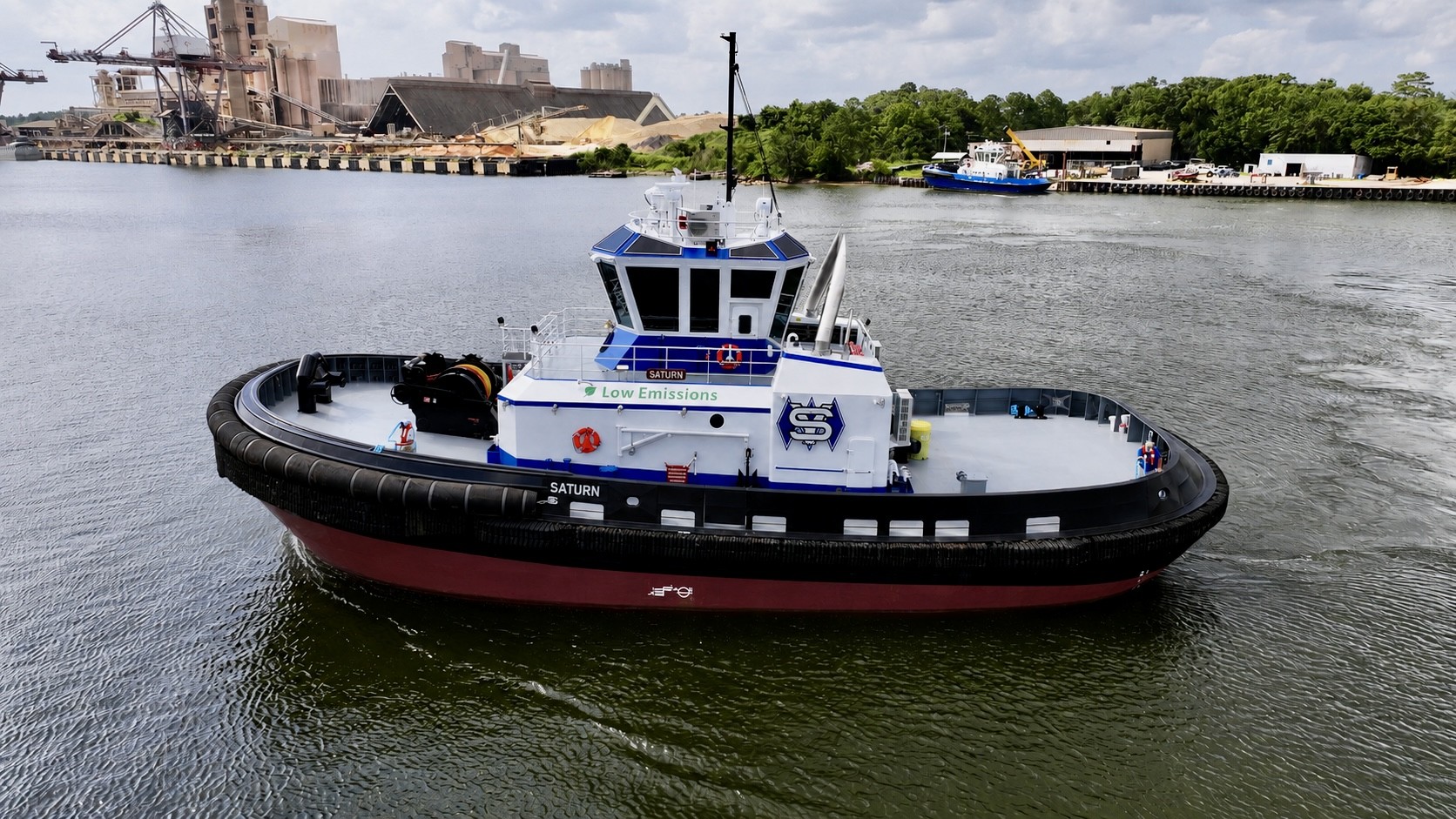
Master Boat Builders Launches Saturn, First in New Rapport 3000 Escort Tug Series for Suderman & Young Towing Company

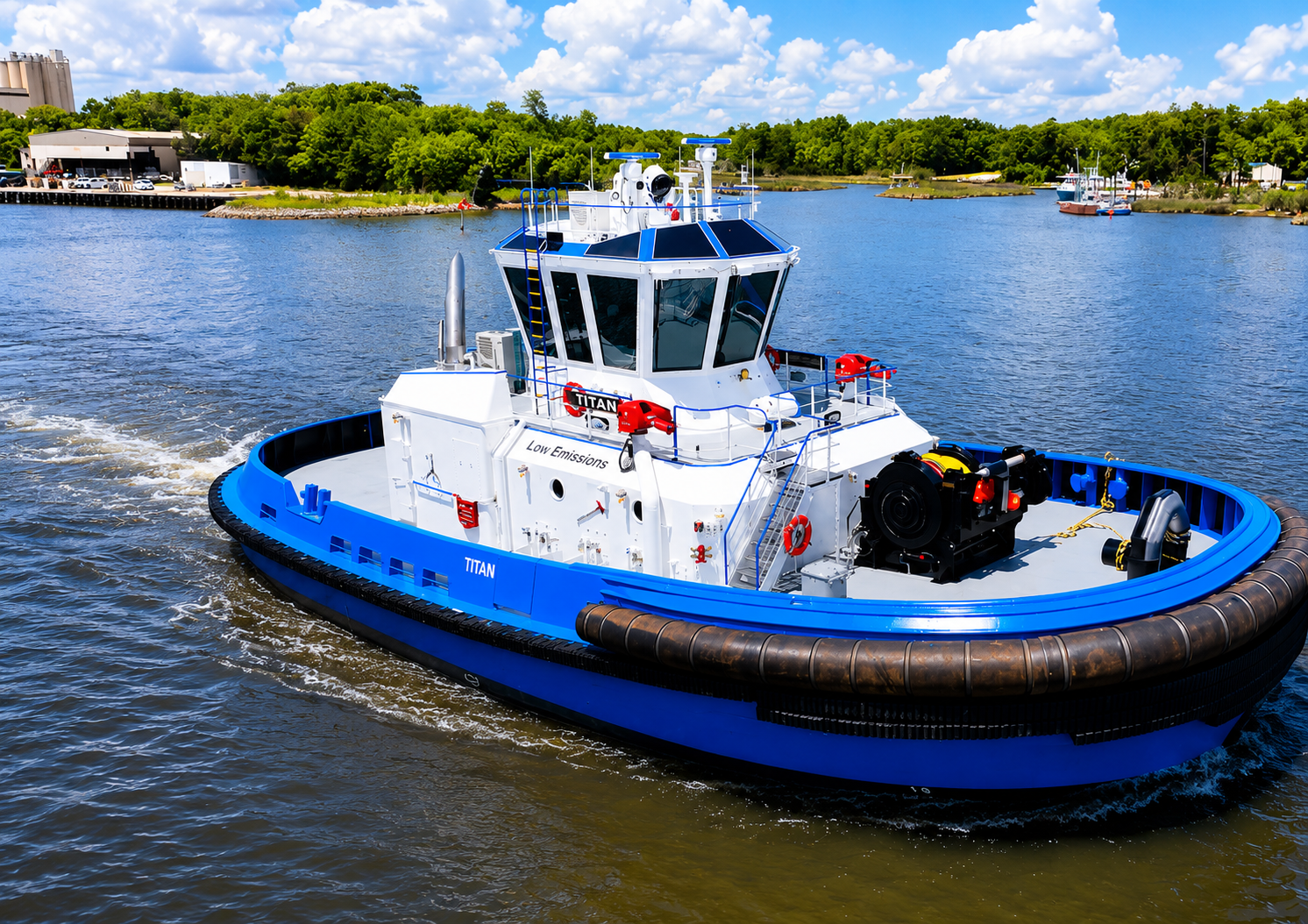
CODEN, AL., — (April 8, 2026) – Master Boat Builders, Inc. (“Master Boat”) today announced the successful launch of Saturn, the first vessel in the new H500 series of Rapport 3000 escort tugs built for Suderman & Young Towing Company, marking Master Boat’s entry into a new class of high-performance escort tug design. The Saturn (H500) marks the first of four vessels in the H500 series, with H501 through H503 currently under construction.

“The Saturn is a testament to what’s possible when expert shipbuilding meets forward-thinking design. We’re proud to deliver this first vessel to Suderman & Young and look forward to completing the remaining three in the series,” said Garret Rice, President of Master Boat Builders.

The Saturn represents a significant step forward in escort tug capability. With an overall length of 98 feet, a moulded beam of 43 feet, and a bollard pull capacity of more than 90 metric tons, the vessel is powered by two engines producing a combined 7,000 horsepower and is capable of approximately 13 knots. Designed to accommodate a crew of six, the Saturn carries 44,342 gallons of fuel oil and registers at under 300 GRT, offering operational flexibility across a range of port and escort assignments.

Master Boat Builders Delivers Rapport 2800 Tugboat for Gulf LNG Partnership

CODEN, Al., — (April 2, 2026) – Master Boat Builders, Inc. (“Master Boat”) today announced the successful delivery of the Jill, marking a major milestone in its ongoing partnership with Gulf LNG Tugs of Port Arthur, LLC (“Gulf LNG”), a joint venture comprised of Bay-Houston Management, LLC; Bay Towing, LLC; Moran Towing Corporation; and Suderman & Young Towing Company. Together, the Gulf LNG partners have more than 400 years of experience in ship assist and towage services. The partnership operates at four LNG terminals along the U.S. Gulf Coast and is a leading provider of marine services at LNG terminals in North America. The Jill is the sixth vessel in a Rapport 2800 tugboat series designed by Robert Allan Ltd. and the second of two identical vessels designed specifically for Gulf LNG operations.

“We are proud of the successful delivery of the Jill for our partners at Gulf LNG,” said Garret Rice, President of Master Boat Builders. “By combining our shipyard’s craftsmanship with the operational expertise held by Gulf LNG, we’ve delivered a vessel that isn’t just a milestone in a series, but a powerhouse designed to meet the highest standards of safety and performance in the industry.”

With an overall length of 92 feet, a beam of 40 feet, and a bollard pull capacity of more than 85 metric tons, this tugboat is equipped with firefighting capabilities that meet ABS Fire Fighting Vessel 1 (FFV1) classification to further enhance safety measures during terminal support operations.

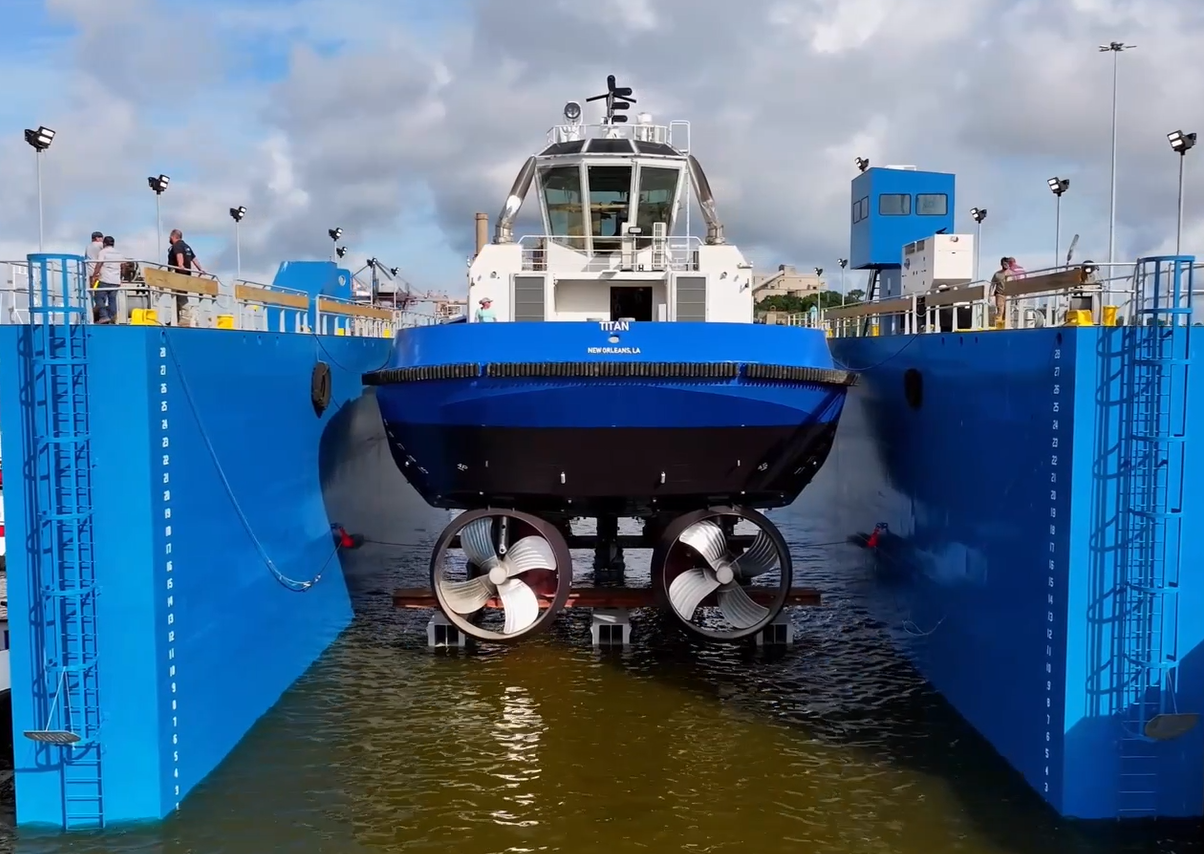
Master Boat Builders Launches Marauder, First of Eight Tugs Built for Maritime Partners

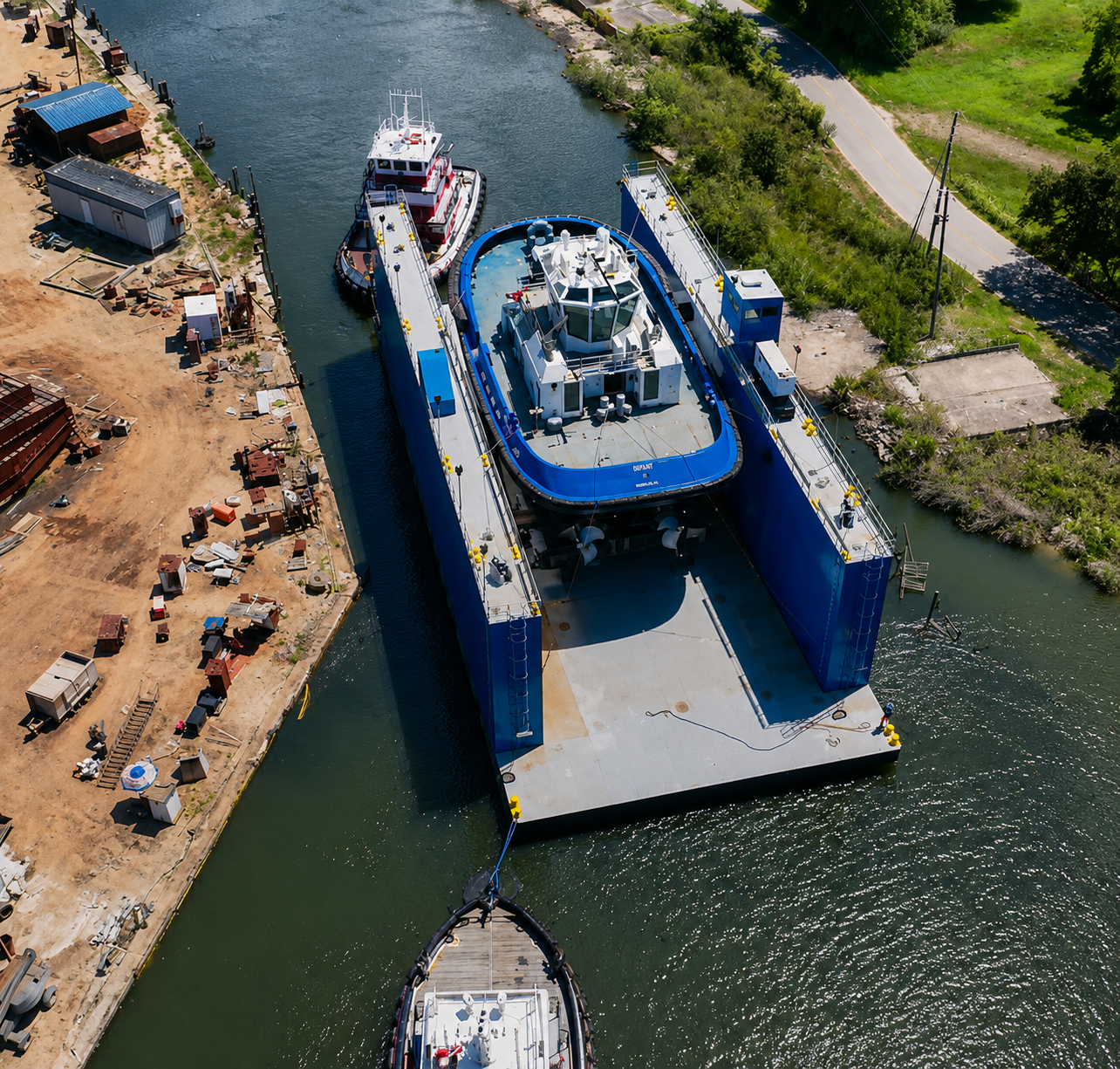
CODEN, Ala. – Master Boat Builders, Inc. (“Master Boat”) announced the successful launch of Marauder, the first of eight tugboats being built for Maritime Partners, LLC. The milestone marks a significant expansion of the companies’ partnership and reflects the growing demand for high-performance tug capacity across the maritime and energy sectors.

“The launch of Marauder reflects what can be accomplished through strong industry partnerships and a shared focus on quality,” said Garrett Rice, President of Master Boat Builders. “Our skilled craftsmen and engineers take great pride in building vessels that meet the highest standards of performance, reliability, and safety, and this project is a testament to their expertise. We look forward to continuing to grow and strengthen our relationship with the team over at Maritime Partners.”

Constructed at Master Boat Builders’ shipyard in Coden, Alabama, Marauder measures 88 feet in length and is classified as an A1 Escort Tug and Towing Vessel. The vessel carries AMS (Automated Machinery System) certification, UWILD (Underwater Inspection in Lieu of Drydocking) certification, and FFV1 fire-fighting capability. It is also designated a Low Emissions Vessel (LEV) under U.S. standards.

Seven additional vessels are currently under contract, with deliveries scheduled to continue through the program’s completion. The full series will expand Maritime Partners’ operational capabilities across towing, escort, and marine support services.

Master Boat Builders Signs Contract with Austal USA to Fabricate Modules for U.S. Navy Towing, Salvage, and Rescue Ship (T-ATS) Program

CODEN, Ala. – Master Boat Builders, Inc. (“Master Boat”) announced it has signed a contract with Austal USA to fabricate modules for the U.S. Navy’s Navajo-class Towing, Salvage, and Rescue Ship (T-ATS) program. The contract establishes Master Boat as a key subcontractor contributing to the construction and delivery of critical vessels that enhance the Navy’s and the Trump Administration’s push to diversify and strengthen the domestic shipbuilding industrial base through distributed production.

The partnership between the two Alabama-based shipyards reflects a significant milestone for Master Boat as it expands its participation in government defense shipbuilding programs. Under the agreement, Master Boat will provide specialized shipbuilding support and fabrication services that will contribute to the construction of advanced naval vessels designed to perform a range of missions including open-ocean towing, salvage operations, humanitarian assistance, and environmental response.

“This contract is a direct result of the partnership we built with Austal USA last year, and it validates what we’ve been saying all along – regional shipyards like ours can take on complex defense work and deliver,” said Garrett Rice, President of Master Boat Builders. “We’re not competing with the major yards. We’re adding capacity that the Navy needs right now. Our proximity to Austal USA, our experienced workforce, and our new investment in dedicated defense infrastructure all position us to support this program and others that follow.”

Under the contract, Master Boat will fabricate two T-ATS hull modules at its Coden, Alabama, shipyard, located approximately 30 minutes from Austal USA’s Mobile facility. The modules will be constructed to Austal USA’s production design and specifications, and through the collaboration, Master Boat will gain valuable experience working within U.S. Navy technical standards and production requirements of large-scale programs. The partnership also supports workforce development and strengthens regional shipbuilding capacity along the Gulf Coast. Upon completion, the modules will be transported to Austal USA’s Mobile shipyard for final erection and outfitting.

“Master Boat has proven itself as a capable and reliable partner, and this contract is a natural next step in our collaboration,” said Gene Miller, Interim President of Austal USA. “By distributing module fabrication to a qualified yard right here on the Gulf Coast, we’re expanding throughput, reducing schedule risk, and strengthening the industrial base that supports our warfighters. This is the model the Navy has asked the industry to pursue, and we’re delivering on it.”

The contract follows Master Boat’s announcement to construct a new $60 million, 150,000-square-foot manufacturing facility dedicated exclusively to government and defense shipbuilding programs. Located directly across Bayou Coden from the company’s existing yard, the 20-acre site will feature a state-of-the-art assembly building optimized for serial production of steel and aluminum ships and modules for Navy and Coast Guard programs. Prior to the new facility’s completion, T-ATS module fabrication will take place at Master Boat’s existing facility. Master Boat currently employs more than 400 people at its Coden shipyard and expects the new defense facility to support approximately 200 additional jobs upon completion. The companies also continue to co-invest in workforce development initiatives to train and equip the next generation of Gulf Coast shipbuilders.

The T-ATS program is designed to replace aging fleet ocean tugs and rescue and salvage ships with a modern, multi-mission platform capable of towing disabled vessels, conducting salvage and recovery operations, supporting diving missions, and assisting with humanitarian and disaster response. Austal USA has already launched the first two 263-foot ships in the program, demonstrating continued progress in delivering these important capabilities to the Navy. Master Boat’s role in the program contributes to the broader maritime industrial base that supports naval shipbuilding across the United States. The collaboration between regional shipyards and suppliers strengthens domestic manufacturing capacity and ensures the timely delivery of mission-critical vessels to the fleet.

Master Boat Builders Expands Shipbuilding Operations with $7.8 Million Investment in Mobile County

Master Boat Builders, Inc. today announced that it has executed a contract to build two new tugboats in its Coden, Ala., shipyard for Moran Towing Corporation based in New Canaan, Conn. The new tugs will be the first that Master Boat Builders will build for Moran Towing – one of the oldest and respected maritime operators in the United States.

Moran Towing is known for expansive coast to coast operations, utilizing its versatile fleet to provide vessel towing, bulk marine transportation, LNG support operations, and environmental recovery services.

“We look forward to working with Master Boat on this project. Master Boat has a great reputation for delivering quality equipment on a consistent basis and we hope this new contract will lead to future opportunities for collaboration between the two companies, said Sean Perreault, Vice President, Engineering Services of Moran Towing. “While we have an ongoing commitment to our traditional suppliers, our demand from customers has given us the opportunity to work with new partners that we hope will become long term relationships.”

Naval architect and marine engineering firm, Crowley Engineering Services created the tugboat design, which will meet United States Coast Guard Sub-M regulations and will be classed through the American Bureau of Shipping.

The new tugboats will have an overall length of 86’, beam of 36’, and produce a bollard pull of over 55 metric tons. The vessel will feature two Caterpillar main engines (3512E), EPA Tier 4 certified and each producing 2549HP, along with two Kongsberg thrusters (US 205S FP), and a Markey Machinery Company bow winch (DEPC-48).

“Moran is one of the most respected tugboat operators in the US and we are honored they have chosen us to build their next set of tugs,” said Garrett Rice, President of Master Boat Builders.